

Artificial intelligence is transforming nearly every area of healthcare, and veterinary dentistry is beginning to evolve alongside it. One company gaining attention in this niche field is Nerovet AI Dental Company, a platform that claims to use AI technology to help veterinarians analyze pet dental X-rays and detect oral health problems in dogs and cats.
For many pet owners, the idea of AI-powered dentistry may sound futuristic. However, dental disease is one of the most common health issues in household pets. According to the American Veterinary Medical Association (AVMA), most dogs and cats show signs of dental disease by the age of three. Early diagnosis can make a major difference in preventing pain, infection, and long-term complications.
This guide explains what Nerovet AI Dental Company is, how its technology works, its potential advantages and limitations, and what pet owners should know before trusting AI-assisted veterinary dentistry tools.
What Is Nerovet AI Dental Company?
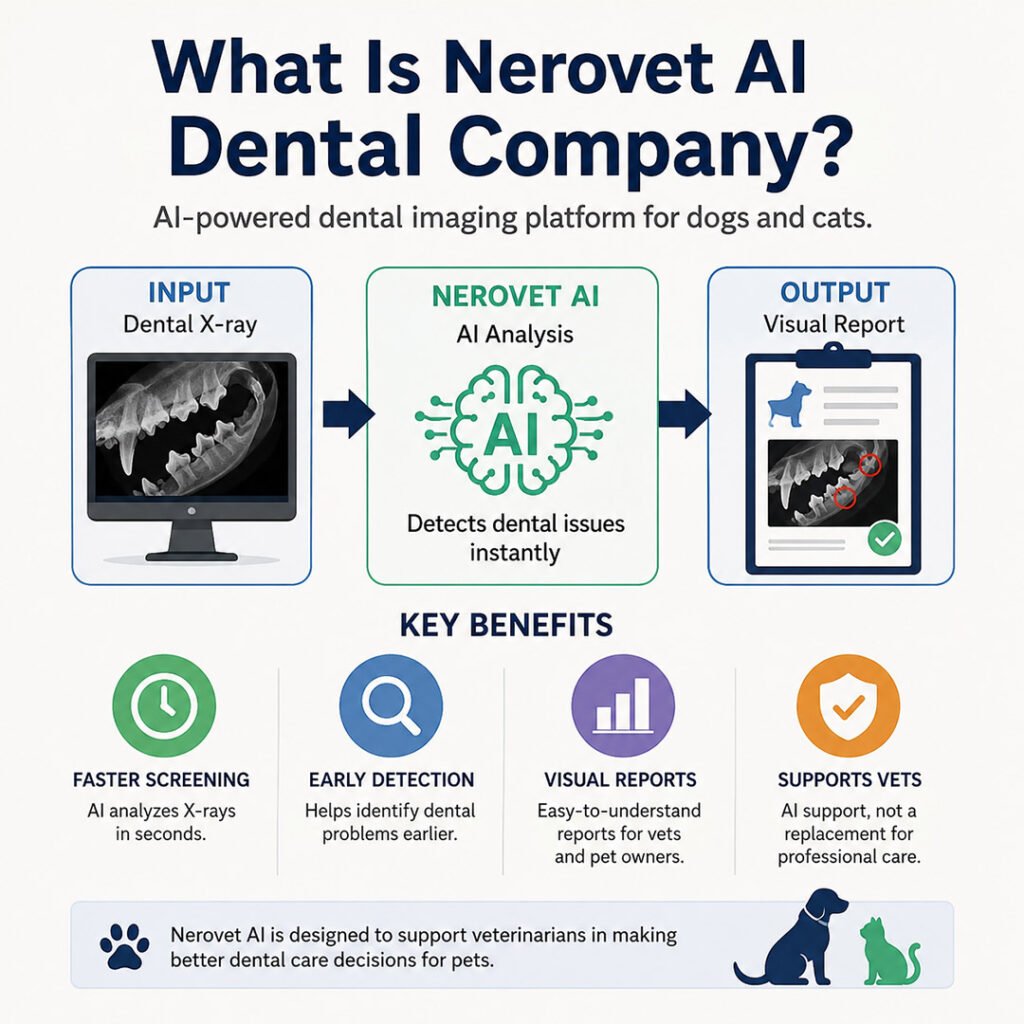
Nerovet AI Dental Company appears to be a veterinary technology platform focused on AI-powered pet dentistry. Based on publicly available information, the company primarily targets veterinary clinics and animal healthcare professionals rather than human dental practices.
The platform reportedly uses artificial intelligence and machine learning to analyze pet dental X-rays and identify oral health conditions that may otherwise be difficult to detect quickly. Its website and related descriptions emphasize faster screening, visual reports, and support for veterinary decision-making.
Unlike companies such as Overjet or Pearl AI, which focus mainly on human dentistry, Nerovet appears to specialize in veterinary oral healthcare for dogs and cats. The company positions itself as a support tool for veterinarians rather than a replacement for professional medical judgment.
How Nerovet AI Dentistry Works
Nerovet AI Dentistry reportedly functions as a diagnostic support platform. Veterinary clinics upload dental X-rays or oral imaging scans into the system, where AI algorithms analyze the images for patterns commonly associated with dental disease.
The technology appears similar to AI radiology systems already used in human healthcare. These systems rely on machine learning models trained on large imaging datasets to recognize abnormalities and highlight suspicious areas for closer review.
According to available descriptions, the platform may help veterinarians identify conditions such as periodontal disease, tooth resorption, root abscesses, bone loss, and fractured teeth. The software reportedly generates visual reports that veterinarians can use during consultations with pet owners.
Dental disease in pets often develops slowly and silently. Many animals continue eating and behaving normally even while suffering from serious oral pain. This is one reason veterinary clinics are exploring AI-assisted diagnostic systems that could help detect problems earlier.
Although the platform’s capabilities sound promising, publicly available clinical validation remains limited. Most current information comes from company materials and secondary articles discussing its features.
Why Veterinary Clinics Are Interested in AI Dentistry
Veterinary clinics are increasingly adopting digital healthcare tools to improve efficiency and patient care. AI-assisted dental analysis may help clinics save time, improve consistency, and explain dental findings more clearly to pet owners.
In busy veterinary environments, reviewing large numbers of dental X-rays can be time-consuming. AI systems may assist by automatically highlighting suspicious areas that deserve closer examination. This could potentially improve workflow efficiency while helping veterinarians detect subtle issues earlier.
Another advantage is communication. Visual AI-generated reports may help pet owners better understand dental conditions and treatment recommendations during appointments. In many cases, seeing highlighted problem areas directly on an X-ray can make explanations much clearer.
AI healthcare systems are already widely used in human medicine, especially in radiology and imaging analysis. Veterinary healthcare appears to be gradually moving in a similar direction as clinics explore new diagnostic technologies.
Is Nerovet AI Smart Dentistry Legit?
One of the biggest questions people ask is whether Nerovet AI Smart Dentistry is legitimate.
Based on the information currently available, Nerovet appears to be a real veterinary AI project or startup. However, there is limited independently verified public information regarding clinical studies, regulatory approvals, funding history, or peer-reviewed research connected to the platform.
The company claims high detection accuracy, with some sources citing figures above 90%. However, detailed testing methodologies and independent validation datasets are not publicly available. In medical AI, accuracy claims alone are usually not enough to fully evaluate reliability. Veterinary professionals typically look for additional details, such as sensitivity rates, external validation, and transparency in clinical testing.
This does not automatically mean the platform is unreliable. Many early-stage healthcare startups operate with limited visibility during their early development phases. Still, veterinary clinics should carefully evaluate AI healthcare products before relying heavily on them in clinical environments.
Most publicly available information about Nerovet AI Dental Company comes from:
- the company’s official website,
- technology blog articles,
- and AI tool directories summarizing its claims.
At the moment, there is limited public evidence of FDA clearance, major veterinary partnerships, or published scientific validation.
For pet owners, this means it is wise to view the platform as an emerging technology rather than a fully established industry leader.
Nerovet AI Dentistry vs Human Dental AI Companies
To better understand Nerovet’s market position, it helps to compare it with established dental AI companies in human healthcare.
| Company | Primary Focus | Market |
| Nerovet AI Dentistry | Veterinary dental AI | Veterinary clinics |
| Overjet | Human dental AI | Dentists and insurers |
| Pearl AI | Dental imaging AI | Human dental practices |
Human-focused dental AI companies often have stronger public validation, larger funding rounds, regulatory approvals, and broader industry visibility. Nerovet appears to operate within a more specialized veterinary niche.
That niche may still have significant long-term potential. Veterinary AI technology is expanding rapidly as clinics adopt more advanced digital diagnostic tools.
Potential Benefits and Risks for Pet Owners
AI-assisted veterinary dentistry may offer several advantages for pet owners, especially when combined with professional veterinary care. Earlier detection of hidden dental disease could improve treatment outcomes and reduce long-term complications. Visual reporting tools may also help owners better understand their pet’s condition during consultations.
At the same time, AI systems are not perfect. False positives and false negatives can occur, particularly when image quality is poor or the training dataset is limited. This is why AI should function as a support system rather than a replacement for veterinary expertise.
Pet owners should also remember that many AI healthcare products are still evolving. Questions about data privacy, clinical validation, and long-term reliability remain important considerations whenever new healthcare technologies are introduced.
Mini Case Study: How AI Could Help a Veterinary Clinic
Imagine a veterinary clinic reviewing dozens of pet dental X-rays every week. Some early-stage dental conditions may be subtle and difficult to spot quickly during a busy workday.
An AI-assisted platform like Nerovet could automatically highlight suspicious regions, helping veterinarians prioritize images for closer review. For example, if a cat has early tooth resorption, the system might flag abnormal areas on the X-ray before the condition becomes severe.
However, the final diagnosis and treatment decision would still rely entirely on a licensed veterinary professional.
Read More: Health Category Articles
The Future of Veterinary AI Dentistry
Veterinary AI technology is still developing, but the broader trend is very real. Artificial intelligence is increasingly being explored for veterinary radiology, pathology analysis, diagnostic imaging, and predictive healthcare systems.
As technology improves, veterinary dental AI platforms may become more common in clinics worldwide. Future improvements could include stronger clinical validation, more transparent testing standards, better software integration, and improved diagnostic accuracy.
For now, Nerovet AI Dental Company represents an example of how artificial intelligence is beginning to influence modern veterinary dentistry.
Final Thoughts on Nerovet AI Dental Company
Nerovet AI Dental Company reflects a growing shift toward AI-assisted healthcare in the veterinary industry. Although publicly verified information about the platform remains somewhat limited, the company appears focused on helping veterinarians analyze pet dental images using artificial intelligence.
For pet owners, the most important takeaway is simple: AI dentistry should complement, not replace, professional veterinary care.
As veterinary AI systems continue evolving, platforms like Nerovet may play a larger role in improving early detection, diagnostic support, and communication in pet healthcare. If your veterinarian uses AI-assisted dental tools, asking questions about accuracy, validation, and professional oversight is always a smart approach.
FAQs
What is Nerovet AI Dental Company?
Nerovet AI Dental Company is a veterinary AI platform that claims to help analyze pet dental X-rays and support oral health diagnostics for dogs and cats.
Does Nerovet AI work for human dentistry?
No. Public information suggests the platform focuses specifically on veterinary dentistry rather than human dental practices.
Is Nerovet AI Dentistry FDA approved?
There is currently limited publicly available information regarding FDA approval or regulatory clearance.
Can AI replace veterinarians in dental diagnosis?
No. AI systems are designed to assist veterinary professionals, not replace clinical expertise or medical judgment.
Why is pet dental care important?
Poor dental health can lead to pain, infection, tooth loss, and broader health complications in pets.
