

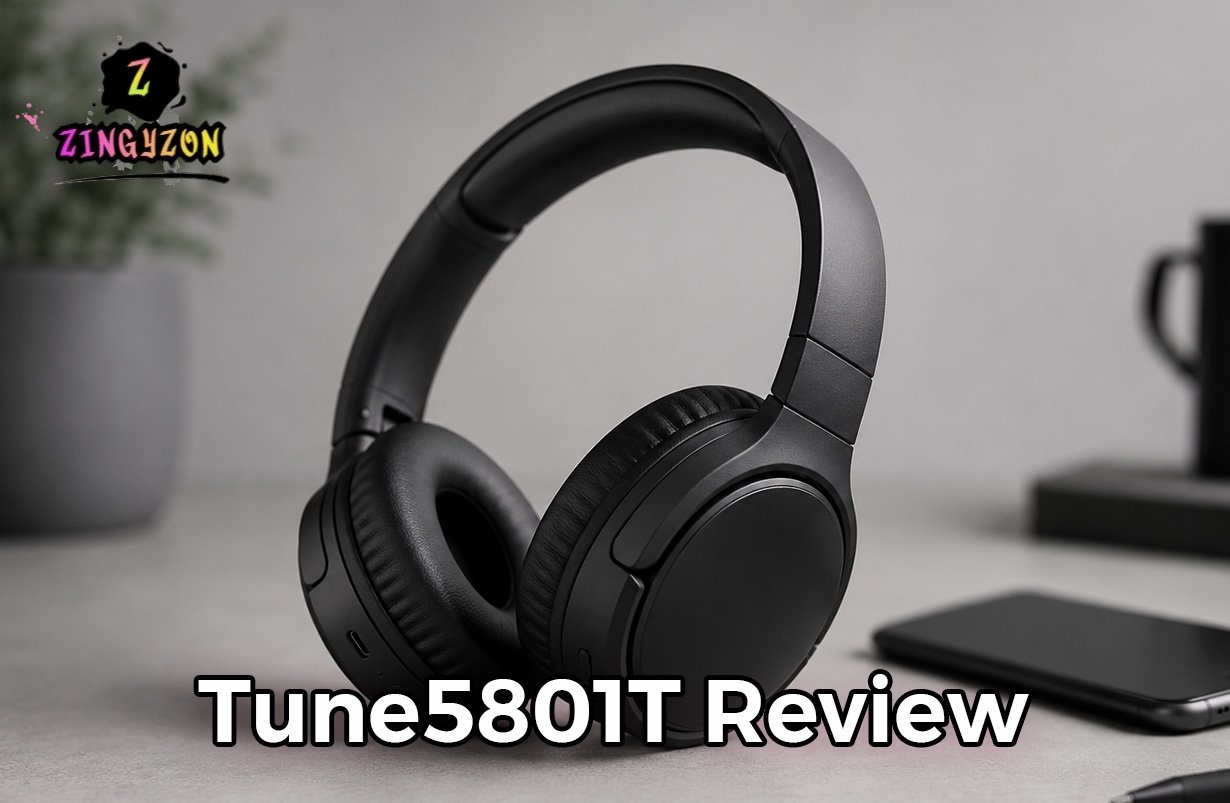
The strange thing about the Tune5801T is that it’s hard to figure out what it’s actually trying to be.
Some listings make it sound premium. Others position it as a cheap backup pair of wireless headphones you grab during a sale and forget about a week later. After spending time with it, the truth sits somewhere in the middle. Not exciting enough to dominate the market, but not nearly as bad as some people online claim either.
A lot of budget audio products fail because they try too hard to imitate expensive brands. Fake deep bass. Overdone noise cancellation. Touch controls that respond when you adjust your hair. The Tune5801T mostly avoids that trap. It feels simpler. Maybe unintentionally, but still.
And honestly, that works in its favor.
It Prioritizes Everyday Use More Than “Impressive Specs”
You notice this pretty quickly.
The setup process is uncomplicated, the buttons are physical instead of overly sensitive touch panels, and Bluetooth reconnecting is more stable than expected for something in this price range. None of that sounds exciting in a product listing, but in daily use it matters more than flashy specs people rarely use.
The headphones seem designed for people who mostly:
- stream YouTube
- listen to podcasts while working
- switch between phone and laptop during the day
- take occasional calls
- want wireless audio without thinking too much about it
That’s a very different audience from audiophiles comparing soundstage details on Reddit forums.
The weird thing is, many reviews ignore this and judge the Tune5801T like it’s competing with Sony or Bose. It’s not. Its actual competition is the pile of anonymous wireless headphones flooding Amazon and discount tech stores in 2026.
Against those? It holds up better than expected.
The Sound Changes Depending on How Loud You Listen
This part surprised me a bit.
At medium volume, the Tune5801T sounds reasonably balanced. Vocals stay clear enough, podcasts are easy to follow, and casual playlists don’t feel messy. But once the volume climbs too high, things start collapsing into each other.
Bass gets thicker. Details disappear. Some tracks become oddly flat.
A lot of people assume headphones should sound their “best” at max volume. Cheap wireless audio rarely works that way. With the Tune5801T, keeping volume around 60% actually produces a cleaner experience.
Acoustic music and spoken content sound noticeably better than aggressive electronic tracks. Gaming is hit or miss. For slower single-player games it’s fine, but competitive shooters expose the weaker directional detail pretty quickly.
Not terrible. Just limited.
Battery Life Is Fine… Until Real Life Gets Involved
Battery claims are always optimistic, and this model is no exception.
If you only stream music from one device at moderate volume, the battery lasts long enough that you probably won’t think about it much. But real usage tends to be messier than manufacturer testing conditions.
For example, switching repeatedly between a laptop and phone drains battery faster. Long video calls do too. I also noticed Bluetooth searching after disconnects seems to eat more power than expected.
So while the advertised numbers aren’t technically false, practical daily use feels closer to “comfortably enough for a day” rather than “incredible multi-day battery.”
One thing it does surprisingly well, though, is standby time. Leave it sitting unused for several days and it barely loses charge. Cheap headphones usually struggle there.
Read More: Power Banks Unleashed: The Future of Portable On-the-Go Charging
A Lot of Complaints Online Probably Come Down to Fit
This is one of those things nobody really explains properly in reviews.
The Tune5801T is oddly sensitive to positioning. Small adjustments completely change the sound profile. Loose fit? Suddenly the bass disappears. Push them tighter and everything becomes heavier and warmer.
That creates confusing online opinions because two people can genuinely have opposite experiences with the same device.
One person says:
“Bass is overwhelming.”
Another says:
“These sound thin.”
Both might be right.
Ear tip sizing, head shape, even glasses can affect how these headphones perform. Budget audio products generally have less tuning flexibility, so physical fit matters more than brands admit.
Cheap Noise Cancellation Isn’t Always Better
This might sound backwards, but weak active noise cancellation can actually make headphones more annoying to use.
A lot of budget brands advertise ANC because people now expect it automatically. The problem is that low-cost ANC often introduces a faint hiss or weird pressure feeling after an hour or two. Some models even reduce vocal clarity while trying to block outside sound.
The Tune5801T doesn’t push aggressive cancellation very hard, and honestly I think that was probably the right choice.
It relies more on passive isolation than dramatic ANC effects. Less impressive in marketing screenshots, sure. But during long listening sessions it feels less fatiguing than many cheap “ANC-focused” alternatives.
There’s this assumption that stronger isolation always equals a better experience. Not necessarily.
Especially if you mostly listen indoors.
The Bluetooth Problems Aren’t Always the Headphones
People blame headphones for connection issues all the time, but older laptops are often the real problem.
On newer phones, the Tune5801T connects pretty smoothly. With aging Windows laptops though, things become less predictable. Audio delay, occasional stuttering, microphone switching problems — all the classic Bluetooth annoyances show up.
That inconsistency explains why reviews feel all over the place online.
Someone testing on a modern Android device might call these reliable. Another person using a five-year-old office laptop might think they’re broken.
A quick Bluetooth driver update actually improved stability more than I expected. Most users probably never try that before returning the headphones.
The Part Most Reviews Ignore: Listening Fatigue
This matters more than people realize.
Some headphones impress you during the first ten minutes and then become exhausting after two hours. Usually because of sharp treble, exaggerated bass, or overly tight clamping force.
The Tune5801T isn’t spectacular in any one category, but it avoids becoming irritating. That’s actually valuable.
Its tuning feels softer and less aggressive than many trendy budget models right now. At first, that can sound slightly underwhelming if you’re expecting dramatic bass. But after several hours, the calmer sound profile starts making more sense.
I’d take that over fake “cinematic” bass any day.
So, Is the Tune5801T Actually Worth Buying?
Depends entirely on expectations.
If someone buys the Tune5801T hoping for premium-level audio because the product page used words like “immersive” or “studio-quality,” disappointment is almost guaranteed.
But if the goal is simpler — reliable wireless listening for everyday stuff — it becomes a more reasonable option.
It’s decent for commuting. Fine for casual streaming. Comfortable enough for long podcast sessions. Not ideal for competitive gaming or people obsessed with audio detail, but that probably isn’t the target audience anyway.
Honestly, the biggest strength of the Tune5801T is that it doesn’t try too hard. In a market full of cheap audio products desperately pretending to be premium, that simplicity feels strangely refreshing.
FAQs
Does the Tune5801T sound good for music?
For casual listening, yes. It performs better with balanced playlists and moderate volume than bass-heavy music pushed at maximum output.
Is the Tune5801T comfortable for long use?
Generally, yes. The lighter fit and softer sound tuning make it easier to wear for extended periods without feeling overly tiring.
Are the Bluetooth issues common?
Mostly on older laptops or devices with outdated Bluetooth drivers. Smartphone connectivity tends to be much smoother.
Does the Tune5801T have strong noise cancellation?
Not really. It leans more toward passive isolation, but that can actually feel more natural during longer listening sessions.
