

Game preservation with TechView TheGameArchives is not just about keeping old games playable. That is part of it, of course, but it is not the whole story. The more useful idea is this: games need to be understood, not only stored. A file, cartridge, disc, or ROM can tell us that a game existed, but it cannot always explain why the game behaved a certain way, why it looked limited on one console and smoother on another, or why a design choice that seems strange today made perfect sense at the time.
That is where TechView TheGameArchives becomes interesting. Instead of treating gaming history as a simple list of titles and release dates, it examines the technical side of games: hardware limits, software tricks, console architecture, emulation, old design habits, and the preservation problems created by modern digital platforms. For players, this makes old games easier to appreciate. For developers and researchers, it gives context that a normal game database often misses.
Why Old Games Need Documentation
Old games are fragile in ways people do not always notice. A cartridge may still work, but the manual may be gone. A disc may be readable, but the patch history may be unclear. A game may be available online, yet nobody remembers the original display setup, controller feel, save method, regional changes, or hardware quirks that shaped the experience. Preservation breaks down slowly, one missing piece at a time.
Documentation protects those missing pieces. It records details like release versions, supported hardware, control layouts, visual behavior, sound design, known bugs, and developer notes. These things might seem small until someone tries to study or restore a game years later. Then, suddenly, the small details become the difference between a rough copy and an accurate historical record.
There is also a misunderstanding around old games: people often assume that if the game still runs, it has been preserved. Not really. A game can run and still be misunderstood. For example, sprite flicker in an NES game may look like a flaw to a modern player, but it often came from hardware sprite limits. Without documentation, the player sees a defect. With context, they see a workaround.
Technical Breakdowns in Game Preservation
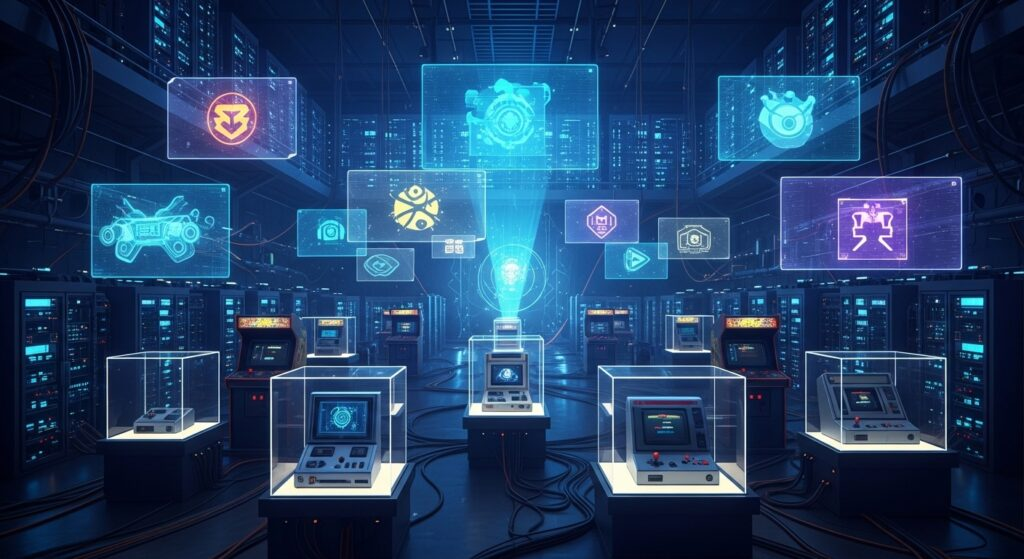
Technical breakdowns matter because they explain why games were built the way they were. A standard archive might list a game as released in 1993 for a specific console. That is useful, but it does not tell you much about the decisions behind the game. A technical breakdown can explain memory limits, processor behavior, graphics restrictions, sound chip capabilities, and how developers worked around those boundaries.
This is where TechView TheGameArchives can offer more value than basic retro gaming content. It does not only describe what the player saw on screen. It can explain what was happening beneath the surface. Why did some games reuse backgrounds? Why did certain soundtracks feel metallic or punchy? Why did early 3D games have fog, short draw distance, or awkward camera systems? Usually, the answer is not just “old technology.” It is more specific than that.
Good preservation should not flatten everything into nostalgia. Some older games were clever. Some were clumsy. Some were limited by hardware, while others were limited by budget, deadlines, or tools. A serious technical perspective helps separate the wheat from the chaff, rather than praising every old game just because it is old.
Lessons from Retro Console Architecture
Retro console architecture is one of the best ways to understand the history of game design. Every old system had its own personality because every system had different limitations. The NES, Super Nintendo, Sega Genesis, PlayStation, Saturn, Nintendo 64, and Dreamcast did not simply offer different graphics. They pushed developers toward different kinds of games.
Cartridges affected storage and loading. CD-ROMs allowed more audio and video, but introduced load times. Some systems handled 2D sprites beautifully but struggled with 3D. Others could push polygons but had texture issues, memory limits, or awkward development tools. These technical details shaped the games more than many players realize.
A common mistake is thinking older developers had smaller ideas. Often, they had large ideas but had to squeeze them into very small technical spaces. That pressure created clever design. Short levels, readable enemies, limited color palettes, looping music, simple menus, and tight controls were not always artistic choices first. Many were practical solutions that later became part of gaming style.
Modern developers can still learn from this. Retro design is not just pixel art and chiptune music. It is discipline. It is knowing what to leave out. It makes mechanics clear because the machine cannot hide a weak design behind endless effects and interface layers.
Emulation and Game Preservation
Emulation is one of the most important tools in game preservation, but it is often discussed too casually. Many players think of it as a way to play old games on a laptop, phone, handheld device, or modern console. That is true, but from a preservation perspective, emulation is also a way to study the behavior of old hardware when original machines become rare, expensive, or unreliable.
The tricky part is accuracy. A game can appear to run fine and still be slightly wrong. Maybe the music timing is off. Maybe the image is too sharp compared to how it looked on a CRT display. Maybe the input delay changes how a platformer or fighting game feels. These differences can be small, but small differences matter when the goal is preservation rather than casual play.
TechView TheGameArchives can help readers understand what accurate emulation actually means. If someone knows how the original console handled sprites, scanlines, audio channels, memory cards, regional refresh rates, and controller input, they can judge an emulated version more carefully. They are no longer just asking, “Does it run?” They are asking, “Does it behave like the original?”
There is also a legal and ethical side here. Game preservation should not be reduced to careless file sharing. At the same time, it is fair to admit that many old games are hard or impossible to buy legally. That tension is real. A serious preservation conversation has to respect ownership rights while also recognizing that culture disappears when access is completely cut off.
Cloud Gaming Preservation Challenges
Cloud gaming creates a preservation problem unlike that of cartridges, discs, or even downloadable games. With cloud gaming, the player may not have the game software at all. They receive a stream from a remote server. The actual game, the version being played, the server environment, and sometimes even the settings are controlled somewhere else.
That makes preservation much harder. A video recording can show what a cloud game looked like, but it does not preserve the playable experience. It cannot fully capture input response, compression artifacts, server conditions, account systems, matchmaking, updates, or live-service changes. If the platform shuts down or the game is removed, the playable version may vanish without leaving much behind.
This is not a future problem. It is already happening across online games, digital storefronts, mobile releases, and cloud services. Games that seem widely available today can become inaccessible very quickly when licensing changes, servers close, or publishers move on. Sometimes players get a warning. Sometimes they do not.
For preservation, this means archives need to track more than the game title. They should document platform availability, version numbers, offline modes, server requirements, update history, shutdown notices, control options, and major content changes. It sounds boring until the information is gone. Then it becomes priceless.
Also Read: Top Node.js Development Companies
Classic Game Design Lessons
Classic games still teach useful design lessons because they were made under pressure. Developers had limited memory, screen space, audio channels, and processing power. That forced them to make quick, clear decisions. The player had to understand danger, movement, reward, and progress without long explanations.
This is why many older games feel direct. Not always fair, and not always polished, but direct. A platform enemy moves in a readable pattern. A power-up stands out because the color palette is limited. A boss attack repeats because the game wants the player to learn timing. These choices were partly technical, partly creative, and sometimes partly survival.
Modern games can learn from that clarity. A game today may have realistic lighting, huge maps, and complex progression systems, but still feel messy if the player cannot understand what matters. Classic design reminds developers that feedback, rhythm, and readability are not old-fashioned ideas. They are still central to good play.
At the same time, older games should not be treated as perfect. Some were padded with unfair difficulty. Some had poor translation, confusing menus, or trial-and-error design. Preserving them honestly means keeping the flaws in view too. That honesty makes the history more useful.
TechView TheGameArchives for Researchers
Researchers need more than release dates. They need context, patterns, and evidence. TechView TheGameArchives can support that by connecting games to the technology around them. A researcher studying early horror games, for example, may need to understand fixed camera angles, storage formats, polygon limits, pre-rendered backgrounds, and memory restrictions. Without the technical layer, the analysis stays shallow.
The same applies to developers, collectors, writers, and students. A developer may study old RPG menus to understand pacing. A collector may compare regional versions. A writer may want to explain why one console had a stronger arcade identity while the other leaned into a cinematic presentation. These questions require more than nostalgia. They require technical and historical details to work together.
A practical way to use TechView TheGameArchives is to start with a platform or game and ask better questions. What did the hardware allow? What did it prevent? What tricks did developers use to work around limits? Did later versions change the experience? Were there differences between regions? Those questions turn a simple archive visit into actual research.
This is also where content creators can improve their work. Instead of saying a game was “ahead of its time,” explain what made it feel that way. Was it animation? Sound design? Memory management? Controller input? Level structure? Specificity builds trust because readers can tell when someone has looked beneath the surface.
What Game Archives Often Miss
Many game archives are good at collecting titles but weaker at preserving relationships. A game is not just a title sitting by itself. It is connected to hardware, controllers, screens, manuals, patches, players, marketing, communities, mods, speedruns, and sometimes servers that no longer exist. If those relationships are missing, the archive becomes thinner than it looks.
This is especially clear with unusual hardware. A light gun game does not make full sense without CRT display context. A rhythm game may not feel right if input delay changes. A memory-card-based game loses part of its identity if save behavior is ignored. An online game without community records is only half-preserved, maybe less.
TechView TheGameArchives has room to stand out by treating this technical and cultural context as part of preservation, not as an afterthought at the bottom. The strongest archives do not pretend everything can be perfectly saved. They show what is known, what is playable, what is missing, and what still needs research.
That kind of honesty is valuable. A complete-looking archive with weak information can mislead people. A careful archive with clear gaps can actually help researchers more. Preservation is not just about having everything. Sometimes it is about knowing exactly what we do not have.
Read More Tech Articles on: Zingyzon.com
FAQs
What is TechView TheGameArchives?
TechView TheGameArchives is a technical-analysis focused section connected to game preservation. It looks at how games worked through hardware, software, console architecture, graphics, sound, and design limitations.
How does TechView TheGameArchives help with game preservation?
It adds context that basic game lists usually miss. Instead of only showing titles and dates, it explains the technical conditions that shaped how games looked, sounded, and played.
Is emulation enough to preserve old games?
No. Emulation is important, but preservation also needs documentation, accurate metadata, version history, hardware context, manuals, display behavior, and notes about regional or technical differences.
Why are cloud games difficult to preserve?
Cloud games often depend on servers, streaming systems, accounts, licenses, and platform access. If those systems shut down, the playable version can disappear even if videos or screenshots still exist.
