

Clinical laboratories face increasing pressure to deliver accurate, reliable results while complying with strict regulatory standards. There’s no margin for error when patient care is at stake. With automation streamlining routine testing and regulations becoming more rigorous, real-time quality monitoring has become a necessity. Waiting for batch reviews or retrospective audits is no longer viable QC issues must be detected and resolved instantly.
This is where Levey-Jennings charts and Westgard Rules prove indispensable. One provides a clear visual overview, while the other applies rule-based statistical logic. Together, they detect subtle shifts, trends, or outliers before they impact patient outcomes.
Levey-Jennings charts track control values over time, allowing labs to visualize whether results stay within acceptable limits. Westgard Rules complement this by flagging values that exceed defined thresholds or reveal emerging patterns. This combination is straightforward, powerful, and clinically proven. Even a single undetected QC error can lead to misdiagnosis. Here’s why modern labs must evolve their QC processes.
The Current Landscape of Clinical Lab Testing
Clinical labs operate at the intersection of speed, accuracy, and accountability. Healthcare systems demand faster diagnostics and precision-driven care, creating high-pressure environments. Efficiency is critical, but so is flawless performance errors can compromise patient safety, trust, and compliance.
Rising Test Volumes, Automation, and Turnaround Pressure
Labs today handle hundreds to thousands of samples daily, driven by new diseases, aging populations, and expanded testing menus. Automation helps manage this workload, but machines don’t detect subtle drifts on their own. Without a robust QC system, minor errors can go unnoticed until it’s too late.
Clinicians expect rapid results, leaving no room for rechecks or delays. Labs must detect deviations in real time to maintain both speed and accuracy.
Tighter Regulatory Scrutiny
Compliance goes far beyond a simple checklist. Labs must adhere to ISO 15189 standards for medical laboratory quality, and in the U.S., CLIA regulations set the baseline. Many labs also undergo inspections from CAP, which demand evidence of consistent, reliable results.
Audits are increasingly focused on real-time performance data and QC traceability. Labs without solid QC tools are vulnerable to regulatory findings and operational risks.
The Real Cost of Analytical Errors
A single inaccurate lab result can have cascading consequences: wrong medications, unnecessary procedures, delayed diagnoses, or legal exposure. Mistakes also affect insurance reimbursements and institutional credibility. Investing in real-time QC tools isn’t optional it’s essential for patient safety, regulatory compliance, and financial stability.
Understanding Levey-Jennings Charts
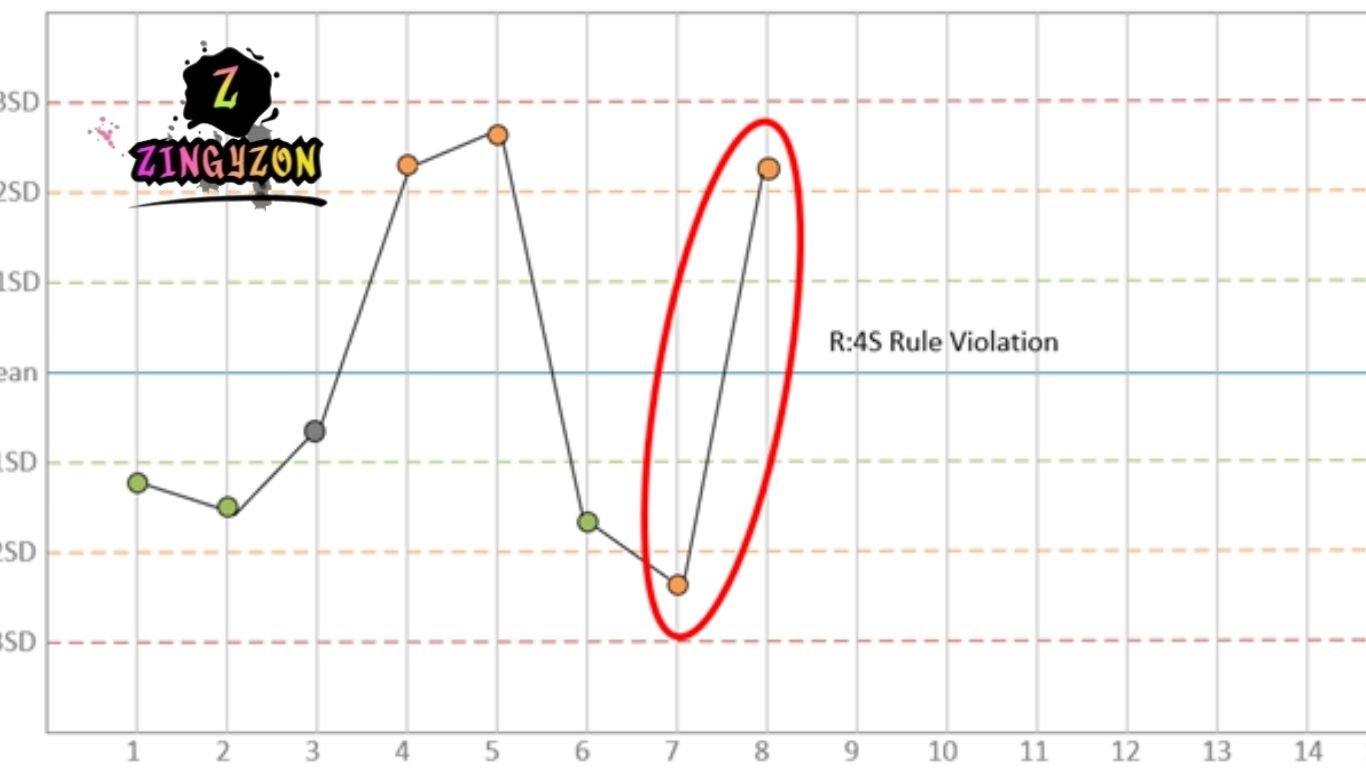
Introduced in the 1950s by Drs. Levey and Jennings, Levey-Jennings charts remain a cornerstone of clinical lab QC. These charts monitor control results over time, plotting values on the Y-axis against time or sequence number on the X-axis.
- The central line represents the mean of control results.
- Lines above and below mark ±1, ±2, and ±3 standard deviations (SD).
These boundaries act as an early warning system. A result outside ±2 SD isn’t always a problem, but patterns such as trends, shifts, or random outliers signal potential issues. By regularly reviewing these charts, labs can intervene promptly recalibrating equipment, replacing reagents, or repeating tests before erroneous data reaches patient records.
Westgard Rules: The Gold Standard in QC
Developed in the 1980s by Dr. James Westgard, Westgard Rules provide statistical rigor to QC monitoring. While Levey-Jennings charts show data trends, Westgard Rules determine when deviations require action. They distinguish between random blips and real QC failures.
Common rules include:
- 1-2s Rule: One control exceeds ±2 SD. A warning, not a failure.
- 2-2s Rule: Two consecutive controls exceed ±2 SD on the same side. Indicates a shift.
- R-4s Rule: Two results in the same run differ by >4 SD. Signals a random error.
- 4-1s Rule: Four consecutive results fall on the same side >1 SD from the mean. Suggests a subtle trend.
- 10x Rule: Ten consecutive results on one side of the mean. Indicates a systematic shift.
How Levey-Jennings Charts and Westgard Rules Work Together
In practice, Levey-Jennings charts and Westgard Rules complement each other. The chart visualizes patterns; the rules confirm when action is required. For example, a single control outside ±2 SD may seem minor, but if the 2-2s Rule triggers, it signals a probable shift that demands attention.
This synergy ensures labs avoid false alarms while catching real errors early preventing incorrect patient results and unnecessary delays.
Why These Tools Matter More Than Ever
Modern labs face tighter margins for error. Even small deviations can indicate instrument malfunctions or reagent problems. Manual oversight is insufficient automated QC with Levey-Jennings and Westgard logic detects what human eyes often miss. These tools form a critical safety net, ensuring issues are flagged before affecting patient outcomes.
Integrating QC Tools into Modern Lab Software
Today’s labs leverage LIS and LIMS platforms with built-in QC modules. These systems automatically track results against Levey-Jennings charts and Westgard Rules in real time, eliminating manual plotting, reducing errors, and standardizing processes across shifts.
Efficiency Meets Accountability
Automated QC not only simplifies workflows it provides auditable, defensible records, reduces turnaround times, and ensures results are both fast and accurate. When QC is fully integrated into lab software, quality isn’t just monitored it’s guaranteed.
How are Levey-Jennings Charts used in the Laboratory
Levey-Jennings charts are used in laboratories to monitor the consistency and accuracy of test results over time. By plotting control values on a graph with the mean as the central line and standard deviation limits above and below, lab staff can easily visualize trends, shifts, or random errors in their processes. Daily or run-to-run control data is recorded, allowing deviations from expected performance to be quickly identified. This real-time visual monitoring enables technicians to take immediate corrective action, such as recalibrating instruments or reviewing reagents, ensuring that patient results remain accurate and reliable. Levey-Jennings charts are particularly valuable in high-throughput laboratories, where manual tracking would be too slow and prone to oversight.
Integrating QC Tools with Laboratory Software
Modern Laboratory Information Systems (LIS) and Laboratory Information Management Systems (LIMS) incorporate real-time QC modules. These systems automatically track control results, generate Levey-Jennings charts, and apply Westgard Rules without manual intervention.
Benefits of Software-Integrated QC
- Real-Time Monitoring: Detect errors instantly and prevent incorrect results from being reported.
- Consistency: Standardizes QC across shifts and personnel.
- Audit Readiness: Provides automated, traceable records for inspections.
- Efficiency: Reduces time spent on manual plotting and repetitive checks.
Frequently Asked Questions
What is quality control in clinical laboratories?
Quality control (QC) in clinical laboratories is a set of procedures that ensures lab test results are accurate, reliable, and consistent. QC involves monitoring instruments, reagents, and procedures to detect errors before patient results are reported.
Why is quality control important in labs?
QC is essential to protect patient safety, maintain regulatory compliance (ISO 15189, CLIA, CAP), and prevent costly errors. Accurate lab results guide proper diagnosis and treatment, making QC critical in healthcare.
How are Levey-Jennings charts used in laboratories?
Levey-Jennings charts plot control results over time, showing trends, shifts, or random errors. They help laboratory staff visually track performance and detect deviations early, enabling timely corrective actions.
What are Westgard Rules and how do they help QC?
Westgard Rules are statistical criteria applied to control data to identify errors in lab tests. By combining rules such as 1-2s, 2-2s, and R-4s with Levey-Jennings charts, labs can distinguish between random variation and true QC failures.
How does automation affect quality control in labs?
Automation increases testing speed and volume but can introduce blind spots. Real-time QC tools integrated with LIS/LIMS platforms ensure automated systems detect deviations and maintain accuracy without relying solely on manual review.
What are best practices for effective laboratory quality control?
Best practices include regular staff training, consistent use of control materials, daily review of Levey-Jennings charts, application of Westgard Rules, and integration of QC into modern LIS or LIMS software for real-time monitoring and audit readiness.
Conclusion
Quality control in clinical laboratories is the foundation of reliable, accurate, and safe patient testing. Tools such as Levey-Jennings charts and Westgard Rules enable laboratories to detect errors, trends, and shifts before they affect patient results. In today’s fast-paced, high-volume testing environment, integrating QC into automated systems and laboratory software enables real-time monitoring, regulatory compliance, and consistent performance across all processes.
By prioritizing robust quality control, laboratories not only protect patient safety but also enhance operational efficiency, maintain trust with healthcare providers, and uphold accreditation standards. Ultimately, effective QC is not just a regulatory requirement it is a critical investment in the accuracy, reliability, and credibility of every clinical laboratory result.
