

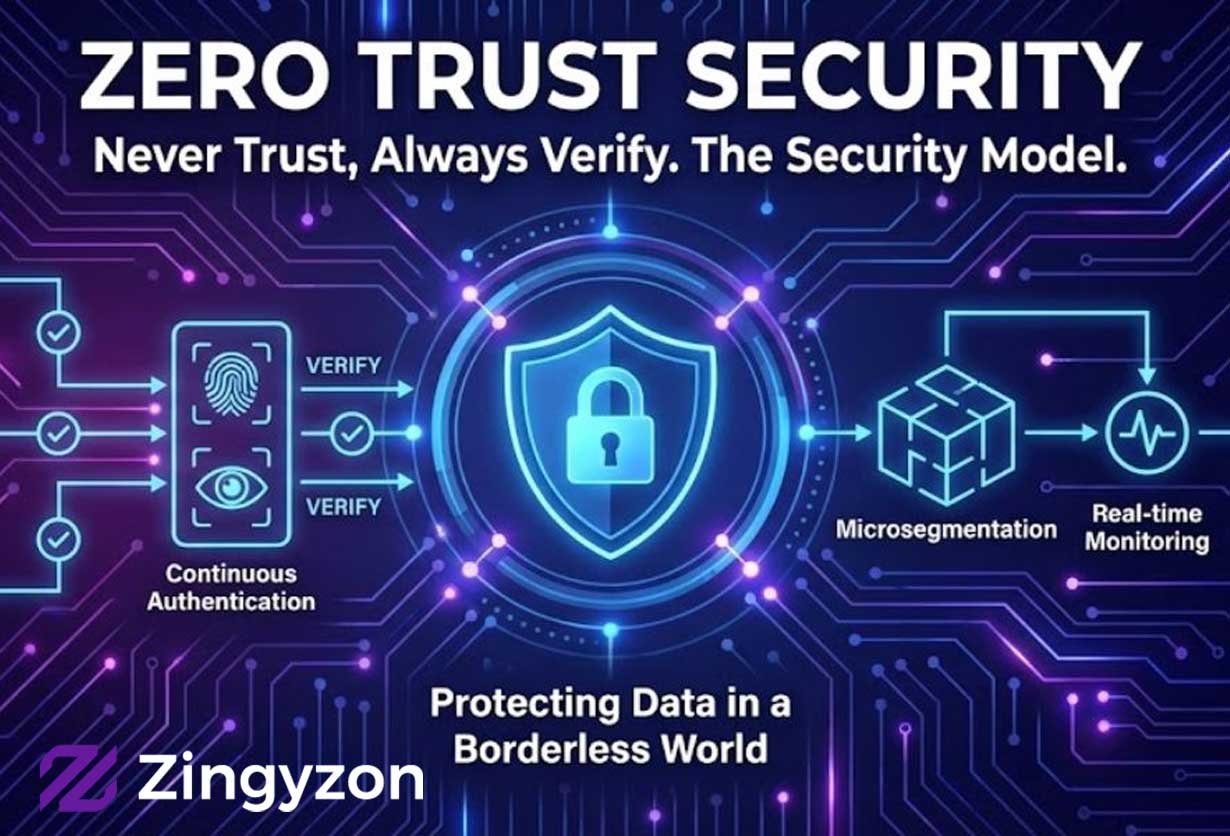
Modern businesses face cyber threats every day. Employees work from different locations, businesses use cloud services, and sensitive data moves across many devices. This has made old security methods less effective. Zero Trust Security offers a smarter way to protect systems by checking every user and device before giving access. Instead of assuming that someone inside a network is safe, it verifies every request. This approach helps businesses reduce risks, protect valuable information, and respond quickly to new threats.
What Is Zero Trust Security and Why Does It Matter Today?
Zero Trust Security is a cybersecurity model built on one simple idea: never trust, always verify. Every user, device, and application must prove its identity before accessing company resources. It does not matter whether the request comes from inside or outside the network.
This model became important because modern businesses no longer operate from a single office. Employees use laptops, smartphones, cloud platforms, and remote connections every day. Attackers often steal passwords or exploit weak devices. By verifying every access request, businesses can reduce the chance of unauthorized access and protect sensitive information more effectively.
How Zero Trust Security Works: The Core Principles Behind the Model
At the heart of Zero Trust Security are three main principles. The first is continuous verification, where every login and access request is checked. The second is least privilege access, which means users receive only the permissions they need to perform their jobs. The third is to assume a breach, meaning the system always acts as if an attacker could already be inside the network.
Instead of relying on one login at the beginning of the day, security checks continue throughout the user’s session. If a device becomes unsafe or a login appears suspicious, the system can request additional verification or block access immediately. This reduces the risk of stolen accounts being used for attacks.
The Key Components of a Zero Trust Security Architecture
A successful Zero Trust Security strategy combines several technologies that work together. Identity and Access Management (IAM) confirms user identities, while Multi-Factor Authentication (MFA) adds another layer of protection by requiring more than just a password. Endpoint security checks whether devices meet security standards before they connect.
Another important component is microsegmentation, which divides a network into smaller protected areas. If attackers enter one part of the network, they cannot move freely to other systems. Businesses also use data encryption, continuous monitoring, and Security Information and Event Management (SIEM) tools to detect unusual activity and protect valuable information.
Zero Trust Security vs Traditional Security: What Has Changed?
Traditional security models focused on protecting the network perimeter with firewalls. Once users entered the network, they were often trusted automatically. This worked well when employees mainly worked in offices using company-owned devices.
Zero Trust Security takes a different approach. Trust is never automatic. Every request is verified based on the user’s identity, device health, location, and behavior. Even employees already connected to the company network must continue proving that they are authorized to access business resources.
How Zero Trust Security Protects Modern Businesses from Cyber Threats
Cybercriminals often use phishing, ransomware, stolen passwords, and insider attacks to gain access to company systems. Zero Trust Security reduces these risks by limiting access and monitoring every connection. Even if attackers steal login details, they may still fail because the system checks device health, location, and additional authentication factors.
The model also helps stop lateral movement inside the network. If an attacker gains access to one system, strict access controls and microsegmentation prevent them from reaching other critical resources. This greatly limits the damage that a successful attack can cause.
The Business Benefits of Adopting Zero Trust Security
Businesses that implement Zero Trust Security often improve their overall protection while supporting modern ways of working. Remote employees can safely connect from different locations without giving up security. Cloud applications also become easier to protect because access decisions depend on identity instead of network location.
The model improves visibility across the organization. Security teams can monitor who accesses systems, when access happens, and which devices are used. This information helps detect unusual behavior quickly and supports compliance with standards such as NIST, ISO 27001, and GDPR.
Common Challenges When Implementing Zero Trust Security and How to Overcome Them
Moving to Zero Trust Security requires planning and investment. Older systems may not support modern authentication methods, and businesses may need to update their infrastructure over time. Employees may also need training to understand new login procedures and security policies.
These challenges can be managed by introducing the model in stages. Organizations often begin with MFA, stronger identity management, and device verification before expanding security controls across applications and networks. Regular reviews help improve policies as business needs change.
Best Practices for Building a Strong Zero Trust Security Strategy
A strong security strategy begins by identifying valuable data and understanding who needs access to it. Businesses should enable MFA, follow the least privilege principle, keep software updated, and monitor systems continuously for unusual activity.
Regular employee training is also important because human error remains one of the biggest security risks. Organizations should review user permissions frequently, remove unused accounts, and use automated security tools to respond quickly to suspicious events.
Read More: zingyzon.com
Is Zero Trust Security the Right Choice for Your Business?
Businesses of every size can benefit from Zero Trust Security because cyber threats affect small companies as well as large enterprises. The model protects remote workers, cloud environments, business applications, and sensitive customer information while reducing the chances of successful cyberattacks.
Although implementation requires time and planning, the long-term benefits are significant. Better visibility, stronger access controls, and continuous monitoring help organizations stay prepared for modern security challenges. As businesses continue adopting cloud technology and flexible work environments, this approach has become an important part of a strong cybersecurity strategy.
FAQs
What is Zero Trust Security?
It is a cybersecurity model that verifies every user, device, and application before allowing access.
Why is Zero Trust better than traditional security?
It checks every access request instead of trusting users after they enter the network.
Does Zero Trust Security only work for large companies?
No. Small and medium-sized businesses can also use it to improve security.
Is Multi-Factor Authentication enough on its own?
No. MFA is important, but it should be combined with identity checks, device security, and continuous monitoring.
Can Zero Trust Security protect cloud applications?
Yes. It is designed to secure cloud, hybrid, and remote work environments by verifying every access request.
