

If the screen on your phone has become unresponsive after a drop or getting wet, follow these steps to fix it.
If the touch screen on your smartphone doesn’t respond, you’ll soon have a useful device that isn’t useful. Many times, the problem begins after the phone is dropped, comes into contact with water, or is affected by a software glitch. The screen can be unresponsive, slow to respond, or unresponsive to taps in certain areas.
The positive aspect is that not all touchscreen issues are permanent and do not mean your phone is ruined.
This guide will help you how to fix phone screen unresponsive touch, step by step. After your water damage, software troubleshooting techniques, hardware warning signs, and when to consider professional repair will be discussed.
Common Reasons a Phone Touch Screen Stops Responding
The latest smartphones are equipped with a touchscreen layer called a digitizer. This layer is responsible for sensing finger motion and translating it to input commands. If the digitizer malfunctions, part or all of the display may freeze.
One of the most frequent ones is physical injury. When a hard drop occurs, internal display connectors may be disturbed, or the touchscreen layer beneath the glass may be damaged. In certain cases, although internal parts are damaged, the screen may remain entirely normal in appearance.
Another common cause of unresponsive touchscreens is exposure to water. The moisture can disrupt the device’s electrical signals and over time, cause corrosion. Minor problems can manifest immediately, or it can take several hours.
However, not all touchscreen issues are due to hardware damage. A temporary touchscreen malfunction can also be caused by software bugs, corrupted software updates, overheating, charging accessories that are not working properly, or system cache issues.
Hence, it is crucial to perform basic troubleshooting before calling a cell phone repair shop for repair services.
Immediate Steps to Take After a Drop or Water Exposure
If you experience a touchscreen that’s not responding after a fall or exposure to water, it’s crucial that you respond quickly to minimize the risk of permanent damage.
Turn Off the Phone Immediately
The first step, if moisture is involved, is to turn the device off. Both electricity and water can short internal circuits and destroy sensitive parts.
If the touchscreen is unresponsive, press and hold the force restart buttons located on the back of the phone to turn it off.
Remove Accessories and Improve Airflow
Remove the phone case and any screen protector that may be trapping moisture or interfering with touch sensitivity. Extraction of the SIM tray also improves airflow within the device.
While this might sound obvious, it is important to remove the moisture trapped in the phone so it does not spread deeper and cause corrosion.
Carefully dry the Device
Wipe off any visible moisture with a soft microfiber cloth. Do not use a hair dryer or heater directly, as heat can damage the battery and/or the display assembly.
Instead, dry the phone in a well-ventilated area. Silica gel packets are generally better than rice at absorbing moisture, without leaving dust behind.
Avoid Charging the Phone
Many people make the mistake of plugging in a wet phone too quickly.
If moisture is still present before you charge, it can damage the charging circuits, the display connector, or even the motherboard. Allow the device to dry before recharging.
How to Fix an Unresponsive Phone Screen Step by Step
After the phone is dry and safe to handle, you can start to troubleshoot the touchscreen.
1. Force Restart the Device
Touch input may be temporarily disabled when the operating system is frozen. Usually a forced restart will suffice to bring things back to normal.
On most Android phones, press and hold the buttons simultaneously for about 10-20 seconds. Once rebooted, check the touchscreen again.
This method is quite successful because it does not delete any personal information in the system, but only cleans up system crashes.
2. Clean the Screen Thoroughly
Touch sensitivity can be affected by dirt, oil, fingerprints or leftover moisture. Use a microfiber cloth to clean the display, leaving no residue.
Remove the screen protector and test the screen once more if it has been recently installed and is a low quality screen protector. Some low-quality protectors can cause dead spots and/or ghost touches, particularly after impact damage.
3. Charge the Phone Properly
Sometimes, the touchscreen may display abnormal behavior because of low battery voltage. Place the phone in a good charger and charge for 20 minutes or more.
If the touchscreen doesn’t function as usual when plugged in to charge, you may have the charger or cable wrong. Low-cost add-on items may cause voltage variations that affect the touchscreen’s functionality.
When troubleshooting touch problems or using an iPhone, always use the original charger.
4. Boot Into Safe Mode
Sometimes, third-party applications cause touchscreen problems. It is particularly prevalent among the battery optimizers, screen filter applications, custom launchers, and game overlays.
Safe Mode is a mode that blocks all downloaded apps and runs only the essential software needed to run the system.
On most Android phones, to enter Safe Mode:
- Press and hold the POWER button
- Hold down the “Power Off” button.
- Tap “Safe Mode”
After the phone has restarted, check the touchscreen for responsiveness.
If you experience touch response issues in Safe Mode, then recently installed app is probably the cause. Uninstall any suspicious applications one by one to see if the issue goes away.
5. Test for Dead Zones
Unlock keyboard or drawing software and gently test all parts of the screen.
If some areas fail to respond to touch, then there is a hardware issue. Typical symptoms of dead zones include digitizer damage or loose internal connections caused by impact.
This kind of problem is normally not feasible to resolve without software fixes.
6. Use an OTG Mouse if the Screen Is Completely Dead
In the event of complete touchscreen inactivity, one can try to retrieve the data using a USB OTG adapter and a computer mouse.
A number of Android phones natively support OTG accessories. After connecting, the mouse can assist you in navigating the device, backing up photos, transferring important files or enabling cloud synchronization prior to the repair.
This is frequently one of the simplest ways to save vital information from a damaged phone.
7. Clear the Cache Partition
Sometimes corrupted system cache files can cause display and touch screen glitches.
To clear the cache partition, disable the device and then use a combination of buttons to enter Recovery Mode. Then choose the “Wipe Cache Partition” option.
This is a different procedure from a factory reset as it does not delete personal files or apps.
While it is not a cure-all for touchscreen problems, it can be useful if issues arise from software updates or system crashes.
8. Perform a Factory Reset as a Last Resort
A factory reset can be used if all of the above troubleshooting steps don’t solve the problem, as it may remove any deeper software corruption.
But it should only be done after you back up important files as it removes the apps, settings, and stored data.
A factory reset will not solve the problem if it is still not working with the touch screen, it is most likely a problem with the hardware.
Also Read: Best Wireless Earbuds Under $100 in 2026
Real-World Example
One Samsung Galaxy customer accidentally dropped their phone on a tiled floor. The display did not go off, but the bottom half remained unresponsive.
The user first thought it was a software issue and attempted to reboot the device, enter Safe Mode, and even reset the device to factory settings. All these solutions failed to address the problem.
Upon inspection, a repair technician noticed that the internal display connector had slight looseness at the time of impact. After the connector was correctly fastened, touchscreen was restored to normal function.
In this instance, it illustrates that the damage may be internal and not obvious from the exterior.
Mini Case Study: Water-Damaged Android Phone
A Pixel device that was hit by heavy rainwater looked fine. After a few hours, though, the touchscreen began to behave erratically, and ghost touches appeared on the screen.
The owner turned the phone off, removed the SIM tray, and kept the phone dry for almost 48 hours using silica gel.
Once dry, the phone automatically booted up and the touchscreen functioned as normal without needing any replacement parts.
Preventing corrosion from forming inside the device was probably achieved in time.
Signs the Problem Is Hardware Damage
Software troubleshooting can’t fix physically damaged components.
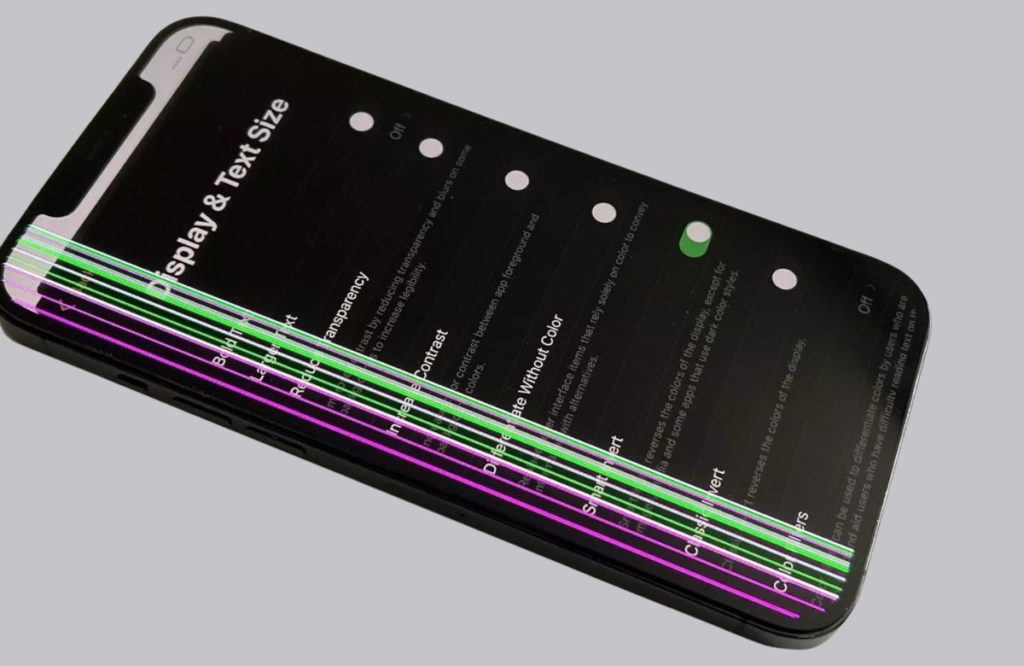
Permanent dead areas, ghost touches, black lines or flickering are usually caused by problems with the digitizer or display assembly.
The internal connectors are often affected by impact or the glass layers are cracked, rendering the glass panels useless. Water exposure can also lead to corrosion, which can eventually increase over time.
If these symptoms persist after software issues are resolved, a professional repair is likely needed.
When to Repair or Replace Your Phone
If the phone is fairly new, and the damage would only affect the display assembly, then repair may be the best option.
But replacement may be more cost-effective if:
- The phone is quite old.
- Several parts are damaged
- Repair is approaching the cost of the device.
If your phone is water damaged, a repair center that is authorized is typically safer, since the techs can examine the internal corrosion that isn’t apparent to the naked eye.
Tips to Prevent Future Touchscreen Problems
Preventing touchscreen damage is much easier than paying for repairs later.
A sturdy protective case and tempered glass protector can greatly reduce damage from drops. Although no accessory will provide 100% protection, quality protection significantly reduces the failure probability of displays.
Another tip is to avoid cheap charging accessories. Poor-quality chargers may cause voltage fluctuations, leading to occasional touchscreen problems.
Avoiding moisture, steam or excessive heat will also help limit the risk of internal damage and touchscreen issues.
Software updates are also crucial, as they can fix bugs that improve device stability and make touchscreen browsing easier.
FAQs
Why is my phone screen not responding after a drop?
Even if the exterior glass surface is undamaged, a hard drop may break the touch screen digitizer, dislodge display connectors or break the glass layers inside the display.
Can water damage cause touchscreen issues?
Yes. Electrical signals can travel through moisture, causing problems and even corrosion inside the touchscreen assembly.
Will a factory reset fix an unresponsive screen?
A factory reset will fix software touchscreen issues, but not hardware issues.
How do I know if my touchscreen is permanently damaged?
If there are dead zones, ghost touches, flickering or unresponsive areas after troubleshooting, it is likely a hardware problem.
Can I recover files from a phone with a dead touchscreen?
Yes. Most phones are compatible with USB OTG adaptors, which enable you to connect a mouse to back up important data before repair.
Read more related article on our website: zingyzon.com
Conclusion
Drops and water are common causes of touchscreen issues, and know how to fix phone screen unresponsive touch without replacing the phone immediately.
Do a force restart, clean the screen, try in Safe Mode, and look for software conflicts. In most cases, these actions suffice, and the computer’s proper operation can be restored.
If things don’t get better or if the damage is physical, it may need professional repair.
When your phone picks up water or suffers impact damage, the quicker you respond, the greater your chances are of saving your phone and preventing costly repairs later.
