

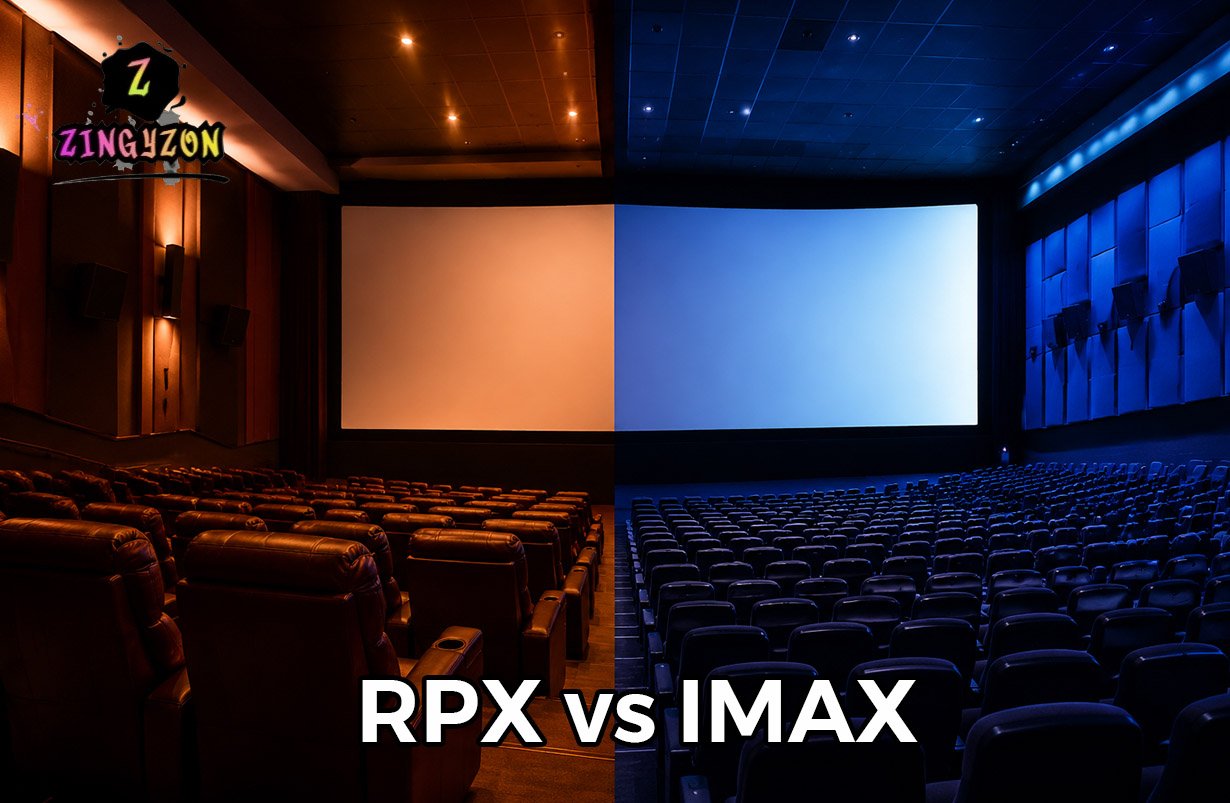
Choosing between RPX and IMAX isn’t always as straightforward as you might think. Sure, both promise an upgraded movie experience, but the devil is in the details—especially when it comes to sound and picture quality. If you’re looking for something more than the usual “bigger is better” narrative, you’re in the right place. Let’s take a closer look at these two cinema giants, without the usual fluff.
IMAX’s Visuals: Bigger Isn’t Always Better
We all know that IMAX is famous for its massive screens, but there’s a common misconception that bigger always means better when it comes to picture quality. Sure, IMAX theaters can be huge, but the real story is about how the IMAX projection system works its magic. The screens aren’t just bigger—they’re engineered to give you more picture, with a taller aspect ratio (1.43:1) that lets you see more of the action, especially in movies shot with IMAX cameras.
This taller screen isn’t just a gimmick. It’s designed to make you feel like you’re part of the film. Combine that with IMAX’s proprietary DMR (Digital Media Remastering) technology, and you’re looking at a visual experience where the contrast is sharper, the colors pop more, and the brightness is cranked up. But here’s the thing—IMAX’s power lies in IMAX-filmed content. If you’re watching a standard film that wasn’t shot for IMAX, you might not feel that “wow” factor as much. So, while the screen is impressive, it’s really the IMAX-filmed films that make the experience stand out.
RPX: More Than Just Comfortable Seats
Now, let’s talk about RPX—Regal’s own take on the premium cinema experience. It’s easy to dismiss it as the “budget” option compared to IMAX, but that’s not the full picture. RPX theaters still offer big screens, just not quite as enormous as IMAX’s. What they do excel at, however, is balance—between the quality of the visuals, the comfort of the seating, and the sound experience.
RPX uses laser projectors that deliver sharp, vivid images, and while they might not have the same technical clout as IMAX’s setup, the results are still outstanding. And here’s where RPX does something IMAX doesn’t: It’s all about comfort. If you’ve ever sunk into an RPX recliner, you know it’s a whole different ballgame compared to a standard movie theater seat. You get extra legroom, more space, and an experience that feels more like a premium lounge than just a theater. You’ll notice that RPX focuses on offering a pleasant, relaxed atmosphere without sacrificing too much in terms of visual quality.
RPX vs IMAX: Comparison
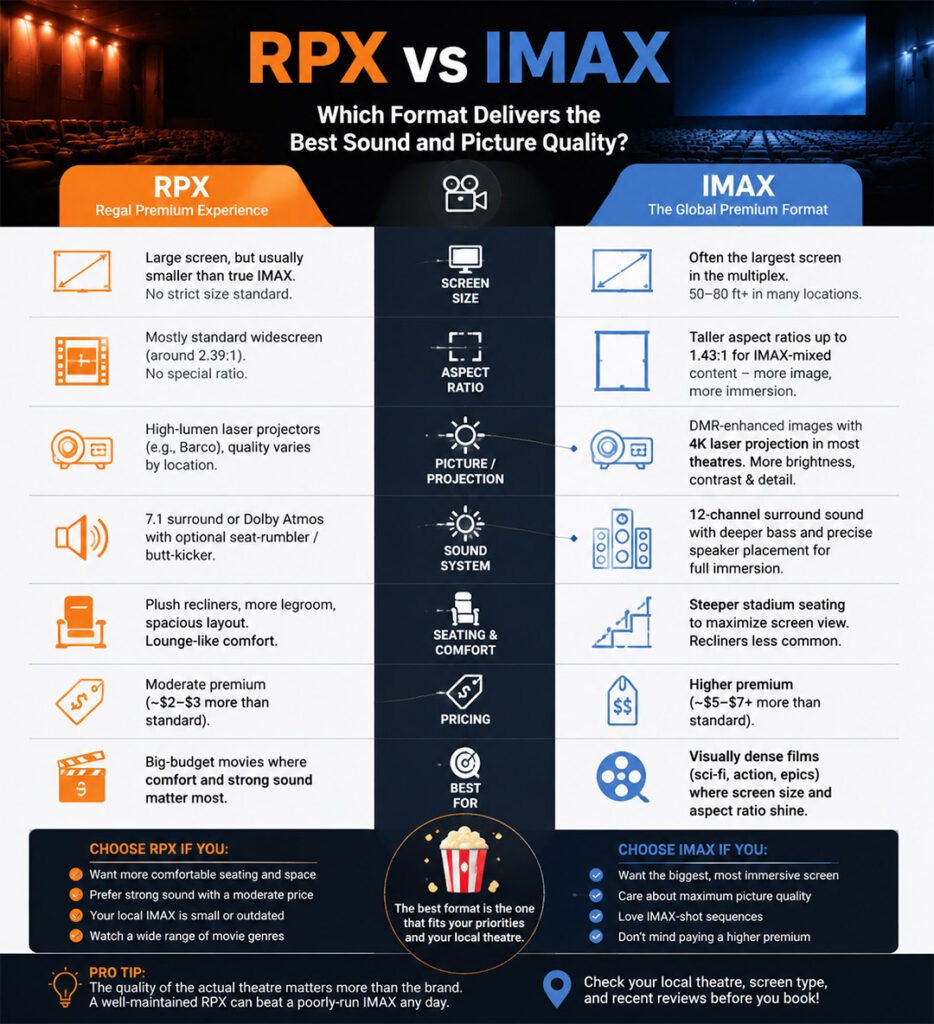
| Screen Size | Larger than regular, but smaller than IMAX | Often the largest in the multiplex (50–80 ft+ screens) |
| Aspect Ratio | Standard widescreen (2.35:1), no special IMAX aspect ratio | Taller aspect ratio (1.43:1), optimized for IMAX-filmed content |
| Projection Technology | Bright laser projectors with vivid, sharp images | DMR technology + 4K laser for enhanced brightness and clarity |
| Sound System | Dolby Atmos or 7.1 surround, sometimes with seat rumbles | 12-channel surround sound with deep bass and spatial accuracy |
| Seating | Plush reclining seats, more legroom, lounge feel | Steeper stadium seating, fewer recliners in many theaters |
| Comfort | More relaxed, comfortable, lounge-style environment | Designed for immersion, but seating is more basic compared to RPX |
| Price | Moderate premium (~$2–3 more than standard theaters) | Higher premium (~$5–7 more than regular tickets) |
| Best For | Big-budget films where comfort and sound are prioritized | Visual-heavy films like sci-fi, action, and IMAX-shot movies |
| 3D Experience | Solid 3D, though not as optimized as IMAX | Top-tier 3D experience with superior visual depth and clarity |
| Ideal Movie Types | Dramas, comedies, thrillers, and those seeking comfort | Blockbusters, superhero films, visually immersive sci-fi or action movies |
The Overlooked Sound Quality in RPX
When it comes to sound, IMAX usually gets all the credit for its 12-channel surround sound system. It’s impressive, no doubt, with its deep bass and highly calibrated speaker placement. But here’s where RPX sneaks in a bit of a sleeper hit. RPX uses Dolby Atmos, which gives you an equally immersive audio experience—just with a slightly different flavor. It’s not about just feeling the sound vibrate through the floor like in IMAX. Instead, Dolby Atmos surrounds you with sound, coming from above, around, and even below. It’s a subtler, but more nuanced experience.
In a film where sound matters—a thriller, a horror flick, or even a high-tension drama—RPX’s Atmos system can pull you into the world of the film in a way IMAX can’t always match. The seats vibrate too, which adds to the experience. While IMAX goes big and bold, RPX offers something a little more refined and dynamic. If you’re someone who loves when the sound is deep, rich, and all around you, RPX’s sound system is definitely a contender.
Bigger Screens vs. Comfortable Experiences
The size of the screen in IMAX is often treated like the golden standard in cinema. And don’t get me wrong—there’s something powerful about watching a film on an IMAX screen that stretches across the room and fills your entire field of view. But here’s a little secret: bigger isn’t always better when it comes to picture quality. IMAX’s gigantic screens can overwhelm you, especially if the movie isn’t made to take full advantage of that size. The picture quality is stunning, but for some people, the sheer size of it can sometimes feel overwhelming rather than immersive.
That’s where RPX has its edge. It offers a bigger-than-average screen, but it also makes sure you have ample space and a comfortable experience to enjoy it. The seating is often more reclining and spacious than you’ll find in most IMAX theaters, which means you can sit back and relax without feeling like you’re sitting at the edge of your seat (literally). It’s the kind of experience that’s perfect for films that are rich in subtlety, like a character-driven drama or a well-crafted mystery.
RPX vs IMAX: Infographic
When to Choose IMAX or RPX
The decision between IMAX and RPX ultimately comes down to the kind of movie you’re watching and what you care most about. If you’re gearing up for a blockbuster—especially one with intense visuals and special effects—IMAX is the obvious choice. There’s no doubt that IMAX brings the most immersive experience when it comes to high-energy action films, like superhero flicks or sci-fi thrillers, where you want every detail to jump off the screen. Plus, the 3D effects in IMAX will leave you feeling like you’re stepping into the movie.
But if comfort and balanced sound are more important to you, RPX offers a great compromise. It’s ideal for those who want a premium experience without the hefty price tag. The combination of Dolby Atmos sound and a relaxed atmosphere means you can enjoy the movie without being physically uncomfortable, especially for longer films. And let’s not forget—RPX still provides excellent visuals, even if it’s not as massive as IMAX.
Price: Does It Justify the Difference?
Let’s talk price. IMAX can set you back $5-$7 more than regular tickets, and that’s for a regular film. When you factor in the IMAX experience—particularly for IMAX-filmed movies—you’re often paying for the exclusive technology and the larger-than-life visuals. But here’s the thing: RPX offers a moderate premium (usually about $2-$3 more) and still delivers excellent picture quality, paired with comfortable seating and solid sound. So, if you’re after value without sacrificing experience, RPX might just be the better choice for you.
Final Thoughts: So, Which One is Better?
If you care about visuals, IMAX offers the most immersive experience—especially with its specialized screens and cutting-edge projection system. It’s perfect for those big, spectacle-driven movies where the sheer visual impact is a key part of the experience.
But don’t sleep on RPX. It’s comfortable, offers great sound, and provides a great overall cinematic experience. It’s the better option if you want to feel relaxed, and you’re happy with a slightly smaller but still high-quality visual experience. Plus, for some films, RPX might actually deliver better sound than IMAX.
FAQs
Does IMAX have better picture quality than RPX?
IMAX often wins for picture quality, particularly with IMAX-filmed content. However, RPX offers sharp, clear visuals on its own, especially with laser projectors.
Is the IMAX sound system really that much better than RPX?
IMAX’s sound system is fantastic, but RPX’s Dolby Atmos system is equally impressive, offering a richer, more nuanced sound experience, especially in subtle films.
Why is IMAX more expensive than RPX?
IMAX comes with a larger screen, proprietary projection, and specialized sound, which justifies its higher price point. RPX is a more affordable but still premium option.
Which is better for 3D movies—RPX or IMAX?
IMAX tends to be better for 3D movies, as its larger screens and specialized projection are made for 3D immersion.
